PLA
Are dual/tri-color silk filaments worth it?
By SSS
Published . Updated .
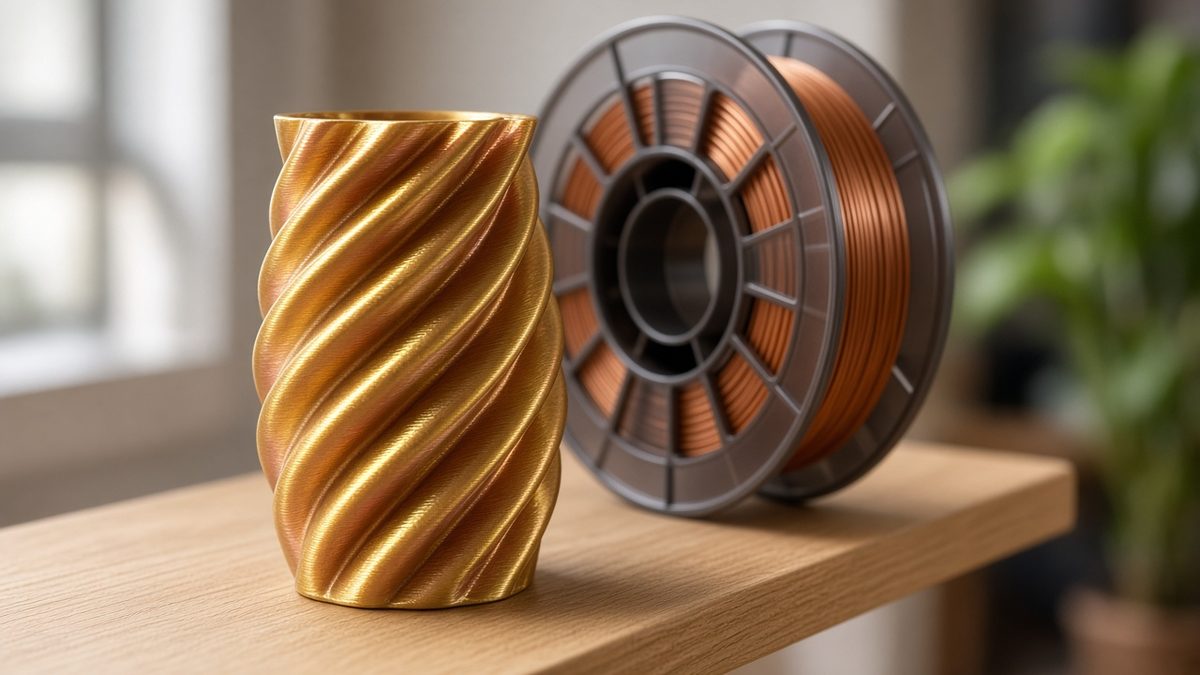
- Nozzle190–230 °C(374–446 °F)
- Bed25–60 °C(77–140 °F)
- Speedup to 250 mm/s
- Dry55 °C · 6 h(131 °F)
- Density1.2 g/cm³
Nozzle, Bed, Speed, Drying. Source: Panchroma product page · Last checked 20 October 2026
Ranked filaments
| Rank | Filament | Material | Nozzle | Bed | Buy |
|---|---|---|---|---|---|
| 1 | Panchroma · Dual Silk PLA | PLA | 190–230 °C374–446 °F | 25–60 °C77–140 °F | |
Product page checked 20 October 2026 lists a nozzle of 190–230 °C (374–446 °F), a bed of 25–60 °C (77–140 °F), drying at 55 °C (131 °F) for 6 h, and print speed up to 250 mm/s. The page is a color product. It does not list a strength comparison with plain PLA. | |||||
| 2 | PrintedSolid · TriColor Magic Silk PLA | PLA | 190–230 °C374–446 °F | 50–70 °C122–158 °F | |
Open Filament Database nozzle 190–230 °C (374–446 °F) and bed 50–70 °C (122–158 °F). Drying is not stored. The database record is not a verdict that tri-color is worth buying. | |||||
| 3 | 3D Fuel · Dual-Color Silk PLA+ | PLA+ | 190–230 °C374–446 °F | 50–70 °C122–158 °F | |
Open Filament Database nozzle 190–230 °C (374–446 °F) and bed 50–70 °C (122–158 °F). The material cell is PLA+. Drying is not stored. No price per kilogram is stored, so worth is not a catalog sort. | |||||
Commission on these links. As an Amazon Associate we earn from qualifying purchases.
Worth it, here, would be a price or a strength number. This catalog has neither for these three rows. Silk PLA is the plain silk process, including the Silk+ sheet that is hotter and slower than PLA Basic. Multicolor is printing more than one filament, which is a different mechanism from one strand that already contains several colors. PLA printing is the base profile. Color-to-color differences is why two colors of one formula can still print differently.
The three rows
Panchroma Dual Silk PLA lists 190–230 °C (374–446 °F), a bed of 25–60 °C (77–140 °F), drying at 55 °C (131 °F) for 6 h, and speed up to 250 mm/s, from the product page checked 20 October 2026. PrintedSolid TriColor Magic Silk PLA stores 190–230 °C (374–446 °F) and 50–70 °C (122–158 °F) from the Open Filament Database, with no drying time. 3D Fuel Dual-Color Silk PLA+ stores the same nozzle and bed from that database, and the material is PLA+. None of the three stores a price per kilogram.
What the community says
a Reddit thread in r/FixMyPrint says the twist is before the extruder and wants a straight path off the spool.
a Reddit thread in r/FixMyPrint: A comment likes the muddy result anyway.
a Reddit thread in r/3Dprinting: is a chemist who cannot see the point of coaxial PLA and PETG and says the website does not explain it.
Pros and cons
Pros
- The one manufacturer page in the table has a checked date and a speed, and it sits in the ordinary PLA nozzle band.
- The twist comment is kept as a path problem, which is the failure these filaments add.
Cons
- No comments, and no row, states a price difference or a strength loss for dual-color versus one-color silk.
- Two of the three rows are Open Filament Database temperatures only.
Printer considerations
- A path that flips the strand will change which color faces out. The score-44 comment puts that twist before the extruder and suggests a straight shot off the spool. That is a feed path, not a hotter nozzle.
- Plain silk already has a weaker-layer warning on the silk page. These three rows do not add a new tensile number.
- Coaxial PLA and PETG, on r/3Dprinting, is a different product. Do not copy that chemist's doubt onto a pigment silk.
Sources & notes
Published . Updated .
- Panchroma Dual Silk PLA product page manufacturer
- Open Filament Database, PrintedSolid TriColor Magic Silk PLA other
- Open Filament Database, 3D Fuel Dual-Color Silk PLA+ other
- Bambu PLA Silk+ technical data sheet datasheet
- a Reddit thread in r/FixMyPrint reddit
- a Reddit thread in r/3Dprinting reddit
- a Reddit thread in r/3Dprinting reddit
- a Reddit thread in r/FixMyPrint reddit
- a Reddit thread in r/3Dprinting reddit
Related questions
- How do I get good PLA prints?PLA
- How do I print silk PLA, and is it weaker?PLA
- How do I print multicolor / which filaments work together?AMS
- Why do different colors of the same filament print differently?Troubleshooting
Related data
- Cheapest filament per kg
- Cheapest PLA per kg
- Will my dryer cover this filament?
- Drying dataset
- How long to dry PETG
- PLA drying temperature and time
Questions
Do dual-color silks need a different nozzle temperature than silk PLA?
Not on these rows. Panchroma Dual Silk PLA, PrintedSolid TriColor Magic Silk PLA, and 3D Fuel Dual-Color Silk PLA+ all store 190–230 °C (374–446 °F). Panchroma's bed is 25–60 °C (77–140 °F) from the product page checked 20 October 2026. The other two beds are 50–70 °C (122–158 °F) from the Open Filament Database. The silk page's 210–240 °C (410–464 °F) figure is Bambu PLA Silk+ only. Do not copy it here.
Does the chemist comment mean tri-color silk will not bond?
No. That score-23 comment on r/3Dprinting is about coaxial PLA and PETG, and the commenter says the site does not explain the product. It is not a test of a pigmented tri-color PLA.