Drying
Why does filament bubble or pop while printing?
By SSS
Published . Updated .
Filaments cited on this page
| Order | Filament | Material | Datasheet | Buy |
|---|---|---|---|---|
| 1 | SUNLU · PLA | PLA | — | |
SUNLU PLA lists 190–230 °C (374–446 °F) and a bed of 50–70 °C (122–158 °F). The pop thread printed PLA at 200 °C (392 °F) and a 60 °C (140 °F) bed, inside this row. Drying for this spool is on the drying guide, not restated here. | ||||
| 2 | Polymaker · Polylite PLA | PLA | Datasheet | |
PolyLite PLA lists 190–230 °C (374–446 °F), a bed of 25–60 °C (77–140 °F), and drying at 55 °C (131 °F) for 6 h. 200 °C (392 °F) and 60 °C (140 °F) from the pop thread sit on this row. 60 °C (140 °F) is the top of the bed. | ||||
| 3 | Bambu Lab · PETG HF | PETG | Datasheet | |
Bambu PETG HF technical data sheet. Nozzle 230–260 °C (446–500 °F), bed 65–75 °C (149–167 °F), drying at 65 °C (149 °F) for 8 h. The comments in this bank do not print this spool. It is the PETG row with a drying line. | ||||
| 4 | SUNLU · PETG | PETG | — | |
SUNLU PETG product page checked 19 October 2026. Nozzle 240–260 °C (464–500 °F) and bed 60–70 °C (140–158 °F). The catalog drying line is 60–65 °C (140–149 °F) for 6–8 h. Use that row rather than copying PETG HF's 8 h onto it. | ||||
Commission on these links. As an Amazon Associate we earn from qualifying purchases.
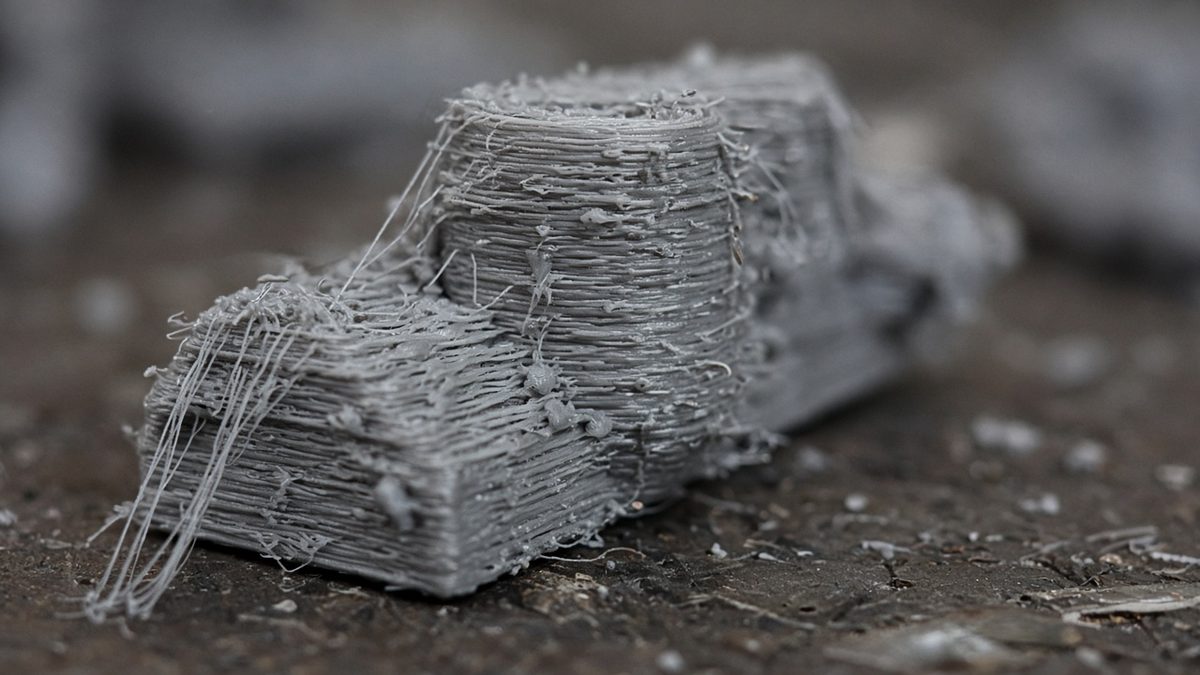
A pop that leaves a hole is the wet-spool description in the comments that are about printing. How to dry the spool, and which threads are not moisture, is already written. This page only separates those cases.
The pop
a Reddit thread in r/FixMyPrint: "Popping sounds are a clear sign of filament that has absorbed moisture. The popping sound is the water literally boiling and exploding out as vapor as it hits the extremely hot nozzle. This explosion of vapor blows the surrounding filament away creating holes or pockets where it happens. Just need t…". "A popping sound really indicates wet filament. The water evaporates in the nozzle, the steam has a bigger volume than the liquid water, and by that you get a gap in your print."
The same thread, including the comment that a pop can be an air gap, is which filaments absorb moisture. The temperatures and the dataset are drying and the filament drying dataset. Closed storage is storage. PETG stringing is the next symptom if the spool is dry and still hairy.
The post printed PLA at 200 °C (392 °F) and a 60 °C (140 °F) bed. That pair sits inside SUNLU PLA, 190–230 °C (374–446 °F) and 50–70 °C (122–158 °F), and inside PolyLite PLA, 190–230 °C (374–446 °F) and 25–60 °C (77–140 °F), with 60 °C (140 °F) at the top of the PolyLite bed. PETG HF lists drying at 65 °C (149 °F) for 8 h. SUNLU PETG lists 240–260 °C (464–500 °F), a bed of 60–70 °C (140–158 °F), and drying at 60–65 °C (140–149 °F) for 6–8 h. Do not copy the 8 h onto the SUNLU row.
The camera thread
a Reddit thread in r/prusa3d is about cheap cameras, one for each printer. "I have that first camera, it really likes to overheat, even with a heatsink on it. Other than that they're great though." That is not a filament bubble.
The PETG bubble discussion that does have comments is on the wet-filament page, from an earlier bank. PLA and PETG are the material hubs. SUNLU and Polymaker are the brand indexes.
Pros and cons
Pros
- The two moisture comments are quoted as supplied, including the cut-off ending.
- Drying setpoints are not repeated from the drying guide.
Cons
- The highest-scored thread in the URL list is not about filament bubbles.
Printer considerations
- A pop followed by a hole is the moisture sign on r/FixMyPrint. The same thread is already written up on the wet-filament page.
- r/prusa3d is ESP32 cameras. The top comments are about cameras, not steam.
- Do not copy one brand's drying hours onto a row that lists different hours.
Sources & notes
Published . Updated .
- SUNLU filament wiki manufacturer
- SUNLU PETG product page manufacturer
- Polymaker US PolyLite PLA product page manufacturer
- Bambu Lab PETG HF technical data sheet datasheet
- a Reddit thread in r/prusa3d reddit
- a Reddit thread in r/FixMyPrint reddit
- a Reddit thread in r/prusa3d reddit
- a Reddit thread in r/FixMyPrint reddit
- a Reddit thread in r/FixMyPrint reddit
Related questions
- How do I stop PETG stringing?PETG
- Do I need to dry filament, and how?Drying
- How should I store filament, and at what humidity?Drying
- Which filaments absorb moisture, and how do I tell if filament is wet?Drying
Related data
- Cheapest filament per kg
- Cheapest PLA per kg
- Will my dryer cover this filament?
- Drying dataset
- How long to dry PETG
- PLA drying temperature and time
- PETG drying temperature and time
Questions
Is every pop wet filament?
The score-80 and score-21 comments on r/FixMyPrint say a pop is water boiling in the nozzle. The wet-filament page also records a comment on that same thread where a pop was an air gap after a hotend rebuild. Read that page before treating every click as moisture.
Where are the drying temperatures?
On the drying guide and in the filament drying dataset. SUNLU PLA's 200 °C (392 °F) and 60 °C (140 °F) print from the pop thread sits inside 190–230 °C (374–446 °F) and 50–70 °C (122–158 °F).