Flexible
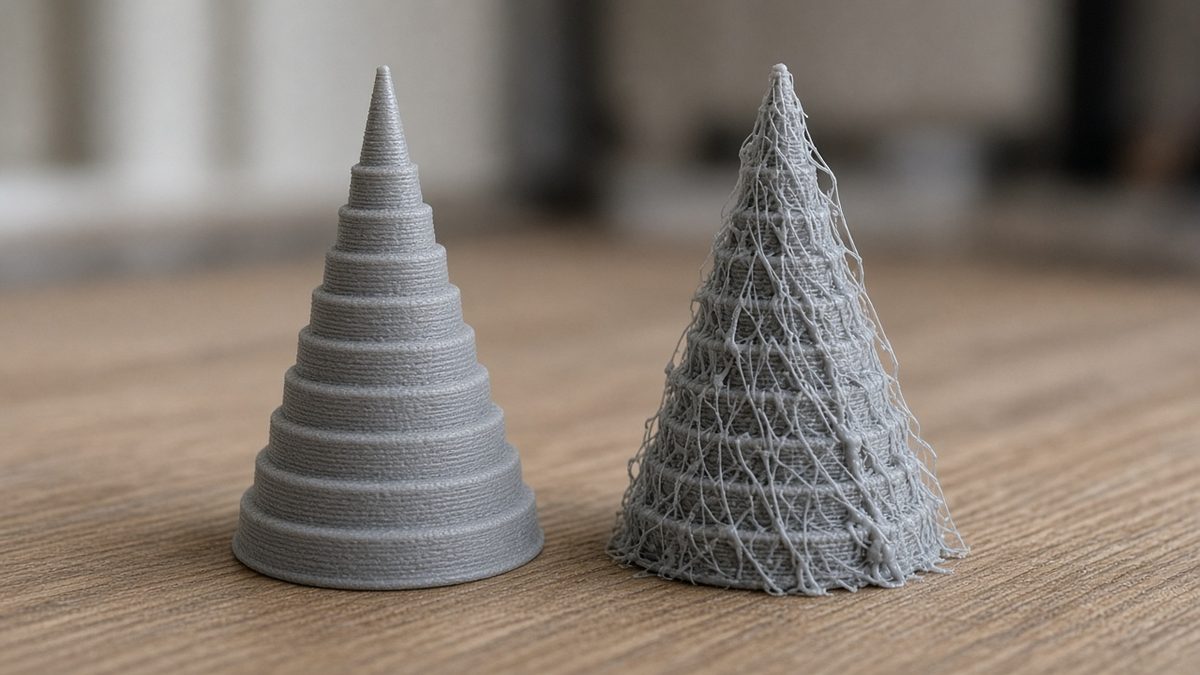
How do I stop TPU stringing and jamming?
By SSS
Published . Updated .
- Nozzle220–240 °C(428–464 °F)
- Bed30–35 °C(86–95 °F)
- Speedup to 200 mm/s
- Dry70 °C · 8 h(158 °F)
- Density1.22 g/cm³
Nozzle, Bed, Speed, Drying. Source: Bambu Lab TDS · Last checked 15 October 2026
Ranked filaments
| Rank | Filament | Nozzle | Bed | Datasheet | Buy |
|---|---|---|---|---|---|
| 1 | Bambu Lab · TPU 95A HF | 220–240 °C428–464 °F | 30–35 °C86–95 °F | Datasheet | |
Technical data sheet checked 18 October 2026 lists a nozzle of 220–240 °C (428–464 °F), a bed of 30–35 °C (86–95 °F), drying at 70 °C (158 °F) for 8 h, and a print speed up to 200 mm/s. Retraction is not stored. | |||||
| 2 | Bambu Lab · TPU for AMS | 220–240 °C428–464 °F | 30–35 °C86–95 °F | Datasheet | |
Technical data sheet checked 18 October 2026 lists a nozzle of 220–240 °C (428–464 °F), a bed of 30–35 °C (86–95 °F), drying at 70 °C (158 °F) for 8 h, and a print speed up to 130 mm/s. The lower speed cap is the sheet. It is not a retraction setting. | |||||
| 3 | Bambu Lab · TPU 85A | 200–250 °C392–482 °F | 30–35 °C86–95 °F | Datasheet | |
Nozzle 200–250 °C (392–482 °F), bed 30–35 °C (86–95 °F), drying at 70 °C (158 °F) for 8 h, print speed up to 200 mm/s, Shore 85A stored on the row. A softer number is not a jam fix by itself. | |||||
| 4 | NinjaTek · NinjaFlex TPU | 210–240 °C410–464 °F | 30–60 °C86–140 °F | — | |
Open Filament Database, dataset imported 13 October 2026, lists a nozzle of 210–240 °C (410–464 °F) and a bed of 30–60 °C (86–140 °F). Drying, speed, and Shore hardness are not stored. The title is not a procedure. | |||||
Commission on these links. As an Amazon Associate we earn from qualifying purchases.
A jam in the tube and a hair between two points are different failures. The comments that arrived are about the tube. Flexible filament, TPU in a multi-material unit, Shore hardness, and stringing are the overlaps. TPU and nylon drying.
Speeds the sheets publish
Bambu TPU 95A HF lists 220–240 °C (428–464 °F), a bed of 30–35 °C (86–95 °F), drying at 70 °C (158 °F) for 8 h, and speed up to 200 mm/s. Sheet checked 18 October 2026. Bambu TPU for AMS lists the same nozzle, bed, and drying, and speed up to 130 mm/s. Bambu TPU 85A lists 200–250 °C (392–482 °F), a bed of 30–35 °C (86–95 °F), the same 70 °C (158 °F) for 8 h, speed up to 200 mm/s, and Shore 85A. NinjaFlex lists 210–240 °C (410–464 °F) and a bed of 30–60 °C (86–140 °F), dataset imported 13 October 2026, with no drying and no speed. None of the four stores a retraction distance.
What the community says
a Reddit thread in r/ender3 describes opening the path so the Bowden tube meets the gear, and says the jams stopped.
a Reddit thread in r/ender3: A comment says TPU needs direct drive.
a Reddit thread in r/FixMyPrint says to slow a Bowden print and to loosen tension.
Pros and cons
Pros
- The path advice stays in the words the comments used. Direct drive, slower, less tension, tube against the gear.
- Manufacturer speeds are quoted only where the row stores them.
Cons
- No comments states a retraction distance, a wipe distance, or a temperature that stopped strings.
- Two of the source threads, including the ones titled as hairs and as an INDX jam, supplied no comments.
Printer considerations
- A comment says a Bowden setup is pushing a limp noodle, and says to slow the print and loosen tension so the filament does not jump out. It asks for no specific millimeters per second.
- Bambu TPU for AMS lists a max of 130 mm/s. Bambu TPU 95A HF and TPU 85A list 200 mm/s. Those caps are not a retraction length.
- Drying at 70 °C (158 °F) for 8 h is what these three Bambu sheets publish. The comments do not say to dry. Wet TPU is [drying TPU and nylon](/answers/dry_tpu_nylon), not a number invented from the stringing title.
Sources & notes
Published . Updated .
- Bambu TPU 95A HF technical data sheet datasheet
- Bambu TPU for AMS technical data sheet datasheet
- Open Filament Database, NinjaTek NinjaFlex other
- a Reddit thread in r/ender3 reddit
- a Reddit thread in r/FixMyPrint reddit
- a Reddit thread in r/FixMyPrint reddit
- a Reddit thread in r/BambuLab reddit
- a Reddit thread in r/3Dprinting reddit
- a Reddit thread in r/BambuLab reddit
- a Reddit thread in r/prusa3d reddit
Related questions
- Can I print TPU on a Bambu/direct drive vs bowden printer?Flexible
- What is the best flexible filament, and how do I print TPU?Flexible
- Which TPU hardness (85A/90A/95A/64D) should I choose?Flexible
- How do I dry TPU and nylon?Drying
- How do I fix stringing?Troubleshooting
Related data
- Cheapest filament per kg
- Cheapest PLA per kg
- Will my dryer cover this filament?
- Drying dataset
- How long to dry PETG
- TPU drying temperature and time
Questions
What retraction should I use?
These comments do not say. A comment says slow down and ease tension. asks for the print speed and does not receive one in the comments. Stringing in general is the retraction page for rigid filament. How to print TPU is the flexible setup.
Does a direct drive end the jam?
on r/ender3 says they were told it needs direct drive. on the same thread, describes a Bowden tube seated against the gear and says the jams stopped after that. Both are comments. TPU in the AMS is a different path, with its own compatibility limits. Shore hardness is the stiffness number, not a jam procedure.