Drying
Does PLA need to be dried?
By SSS
Published . Updated .
How to use this number
- The first sentence is the span and the median of the official tables it names. It is not a new setpoint.
- Stay inside that published temperature span and that published time span. The median is the middle of those tables.
- Use the product row in the table before you start. One brand can sit at either end of the range.
| Brand | Tables | Median | Range |
|---|---|---|---|
| Anycubic | 6 | 50 °C (122 °F) | 45–65 °C (113–149 °F) |
| Bambu Lab | 13 | 55 °C (131 °F) | 50–55 °C (122–131 °F) |
| Creality | 1 | 55 °C (131 °F) | 50–60 °C (122–140 °F) |
| ELEGOO | 2 | 52.5 °C (127 °F) | 45–60 °C (113–140 °F) |
| Eryone | 1 | 70 °C (158 °F) | 65–75 °C (149–167 °F) |
| eSUN | 3 | 50 °C (122 °F) | 50 °C (122 °F) |
| Flashforge | 1 | 50 °C (122 °F) | 50 °C (122 °F) |
| Overture | 1 | 50 °C (122 °F) | 50 °C (122 °F) |
| Polymaker | 24 | 55 °C (131 °F) | 55 °C (131 °F) |
| Prusament | 1 | 45 °C (113 °F) | 45 °C (113 °F) |
| QIDI Tech | 3 | 52.5 °C (127 °F) | 50–55 °C (122–131 °F) |
| SUNLU | 9 | 52.5 °C (127 °F) | 50–55 °C (122–131 °F) |
Range Fahrenheit is the value the maker published. Median Fahrenheit is the conversion of the median Celsius. This is not a recommendation.
Filaments cited on this page
| Order | Filament | Datasheet | Buy |
|---|---|---|---|
| 1 | Bambu Lab · PLA Basic | Datasheet | |
Technical data sheet checked 14 October 2026 lists a nozzle of 190–230 °C (374–446 °F), a bed of 35–45 °C (95–113 °F), and blast-oven drying at 50 °C (122 °F) for 8 h. The same sheet also lists the X1 heatbed at 60–70 °C (140–158 °F) for 12 h. | |||
| 2 | Polymaker · Polylite PLA | Datasheet | |
US product page checked 14 October 2026 lists drying at 55 °C (131 °F) for 6 h and a bed of 25–60 °C (77–140 °F). The Open Filament Database nozzle is 190–230 °C (374–446 °F). | |||
| 3 | ELEGOO · PLA Basic | — | |
US product page lists a nozzle of 190–230 °C (374–446 °F), a bed of 35–65 °C (95–149 °F), and drying at 50 °C (122 °F) for 8 h. Drying on this row is the product-page figure stored with the record. | |||
Commission on these links. As an Amazon Associate we earn from qualifying purchases.
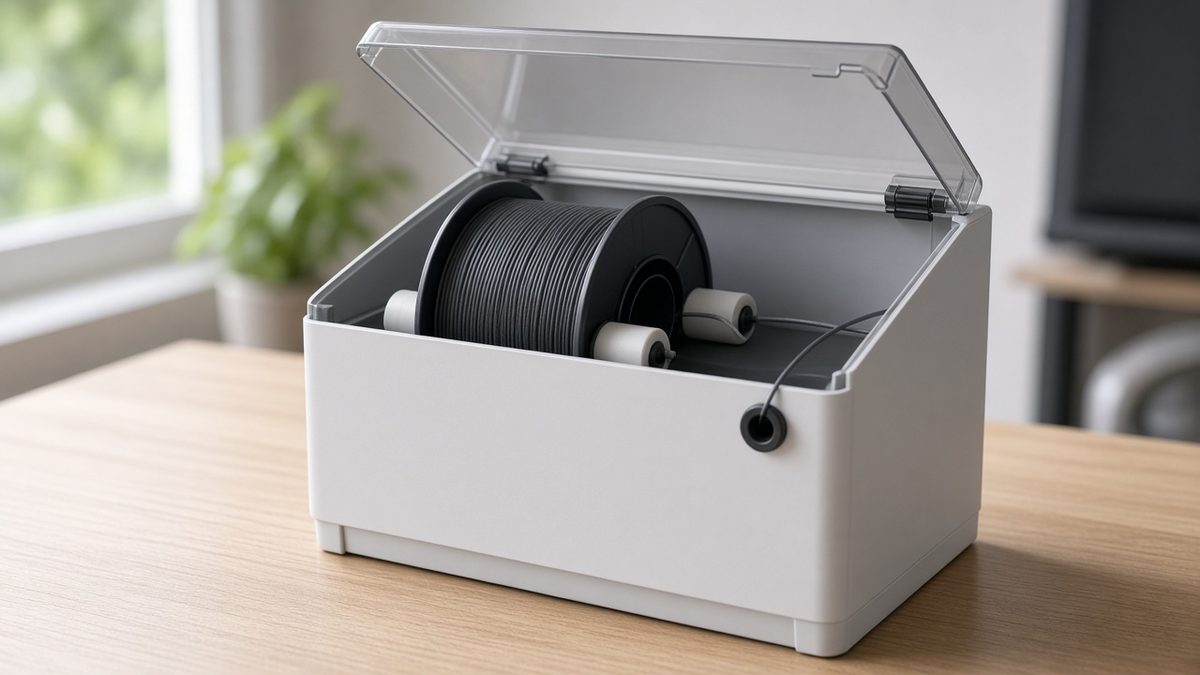
PLA is the material people skip drying, and the sheets above still publish a cycle. How wet filament behaves in general is wet filament. The temperature bands for other plastics are drying. Every official PLA row is on PLA drying temperature and time. The box you put the spool in afterward is storage. A PLA print that strings after it is dry is PLA printing, not another drying theory.
The three PLA cycles
Bambu PLA Basic lists 190–230 °C (374–446 °F), a bed of 35–45 °C (95–113 °F), and blast-oven drying at 50 °C (122 °F) for 8 h. Checked 14 October 2026. The sheet also lists an X1 heatbed method at 60–70 °C (140–158 °F) for 12 h. PolyLite PLA lists drying at 55 °C (131 °F) for 6 h and a bed of 25–60 °C (77–140 °F) on the product page checked the same day. The nozzle cell, 190–230 °C (374–446 °F), is the Open Filament Database. ELEGOO PLA Basic lists 190–230 °C (374–446 °F), a bed of 35–65 °C (95–149 °F), and drying at 50 °C (122 °F) for 8 h.
Pros and cons
Pros
- The answer is the existence of a published cycle, not a humidity map.
- The comment that some people say PLA never needs drying is included, so the disagreement stays visible.
Cons
- No comments states a room humidity or a weight change before and after drying.
- That title is not a Creality sheet, and it is not quoted as one.
Printer considerations
- 50 °C (122 °F) and 55 °C (131 °F) are PLA drying figures. They are not a license to copy a PETG or nylon cycle onto PLA.
- A brand-new spool can still list a drying step. New does not mean the sheet leaves the cell blank.
- Layer lines at 0.08 mm are the other thread. Those comments talk about layer height, not about water.
Sources & notes
Published . Updated .
- Bambu PLA Basic technical data sheet datasheet
- Polymaker PolyLite PLA product page manufacturer
- ELEGOO PLA Basic product page manufacturer
Related questions
- How do I get good PLA prints?PLA
- Do I need to dry filament, and how?Drying
- How should I store filament, and at what humidity?Drying
- Which filaments absorb moisture, and how do I tell if filament is wet?Drying
Related data
- Cheapest filament per kg
- Cheapest PLA per kg
- Will my dryer cover this filament?
- Drying dataset
- How long to dry PETG
- PLA drying temperature and time
Questions
Does a humid climate change the Bambu number?
The Bambu sheet does not state a humidity threshold. It lists 50 °C (122 °F) for 8 h in a blast oven, checked 14 October 2026.